
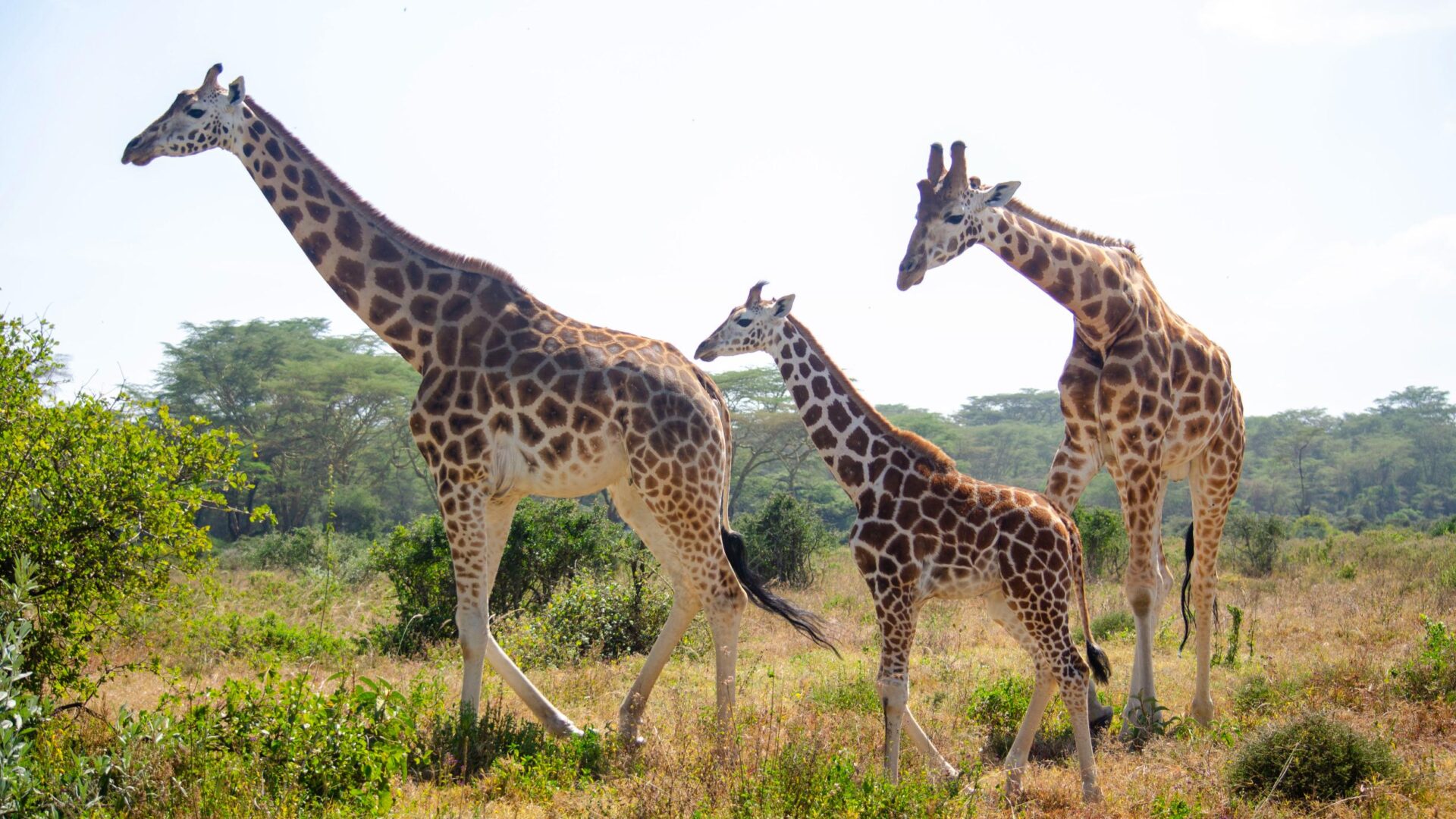
Expect on a Kenya safari to experience unforgettable wildlife encounters, breathtaking landscapes, and early mornings that reward you with nature at its most active. Most safaris include two game drives each day—an early morning drive from approximately 6:00 a.m. to 9:30 a.m. and an afternoon drive from 4:00 p.m. to 6:30 p.m. You’ll travel in a pop-top 4×4 safari vehicle, while the warmer hours of the day are typically spent relaxing at your lodge or tented camp, enjoying lunch, or taking in the surrounding scenery.
Be prepared for cool mornings, dusty roads, and moments of quiet as you search for wildlife. Safaris require patience, but that’s part of the adventure. A long drive with few sightings can suddenly turn into an unforgettable encounter with a pride of lions, a leopard in a tree, or a herd of elephants crossing the road—moments that stay with you for a lifetime.
For a comfortable mid-range safari, expect to budget $250–$600 per person per day, excluding national park entry fees, which typically range from $60–$200 per person per day depending on the destination. Many first-time visitors are surprised that park fees are charged separately, so it’s important to check whether they’re included in your safari package.
While exploring Kenya’s national parks, you’ll remain inside your safari vehicle except in designated areas, ensuring both your safety and the protection of the wildlife. It’s also worth remembering that wildlife is completely wild and sightings can never be guaranteed. However, spending three or more nights in a top safari destination such as the Maasai Mara, Amboseli, or Samburu greatly increases your chances of seeing the Big Five and enjoying a truly memorable safari experience.
That is the honest version. Most first-timer guides tell you a safari is magical and leave it there, which is how people arrive expecting a zoo with a schedule and get quietly disappointed. This guide covers what actually happens hour by hour, what it really costs, the vehicle decision that matters more than your lodge, and the dozen things that surprise nearly everyone on day one.
If you’d rather skip to planning, browse our Kenya safari tours or tell us your dates through custom safari packages.
What’s in this guide
- What a Kenya safari actually is
- A safari day, hour by hour
- What wildlife you’ll realistically see
- Your vehicle matters more than your lodge
- Group safari or private?
- Where you’ll sleep
- What it costs — including the hidden fees
- Getting there and getting around
- When to go
- What to pack
- 12 things that surprise first-timers
- Health, safety and practicalities
- How many days, how many parks
- Frequently asked questions
What a Kenya Safari Actually Is – What to Expect on a Kenya Safari
A safari is a search, not a viewing. You drive slowly through unfenced country in a 4×4 with a guide who reads tracks, listens for alarm calls and knows where a particular lion pride denned last week. Sometimes you find things in the first ten minutes. Sometimes you drive for two hours across empty plains and then round a bush into a cheetah with four cubs.
Two things follow from that, and they shape everything else:
You stay in the vehicle. In Kenyan national parks and reserves — the Masai Mara, Amboseli, Lake Nakuru, Tsavo, Samburu — getting out is prohibited except at designated picnic sites and viewpoints. If walking on foot matters to you, you need to sleep in a private conservancy instead, where it’s permitted. Our walking safaris page explains which areas allow it.
Your guide determines your safari. More than the lodge, more than the park, more than the season. A good guide finds things other vehicles drive past, positions you for light rather than for the closest view, and knows when to sit still. This is the single biggest quality variable in Kenyan safari travel and the hardest to see on a booking page.
A Safari Day, Hour by Hour – Expect on a Kenya Safari
The rhythm is built around animals, which are active at dawn and dusk and asleep in the middle of the day. So you are too.
| Time | What happens | What to know |
|---|---|---|
| 05:30 | Wake-up knock, tea or coffee at the fire | It’s dark and genuinely cold |
| 06:00–09:30 | Morning game drive | The best drive of the day — predators are still moving |
| 09:30–10:30 | Breakfast back at camp, or a bush breakfast | You’ll be hungrier than you expect |
| 10:30–15:30 | Rest, pool, laundry, a nap | Not wasted time — it’s how you survive a 10-day trip |
| 15:30 | Afternoon tea | Cake. Always cake. |
| 16:00–18:30 | Evening game drive, ending with a sundowner | Best light of the day for photography |
| 19:00 | Drinks, then dinner | Often communal; you’ll be escorted to your tent after dark |
| 21:30 | Bed | You’ll be exhausted and it will feel like midnight |
Some camps offer a full-day drive with a packed lunch instead of two shorter ones — worth doing once, particularly in the Mara Triangle, where you can cover ground most vehicles never reach. Conservancies add night drives, which the parks don’t allow.
What Wildlife You’ll Realistically See – Expect on a Kenya Safari
Here is the honest breakdown for a three-night stay in a good area, which is more useful than a list of everything Kenya contains.
| Animal | Realistic odds | Where |
|---|---|---|
| Elephant | Near certain | Amboseli, Tsavo, Mara, Samburu |
| Buffalo | Near certain | Everywhere |
| Lion | Very likely | Mara conservancies, Mara, Tsavo |
| Giraffe, zebra, wildebeest, gazelle | Certain | Everywhere |
| Cheetah | Possible | Mara, Amboseli conservancies |
| Leopard | Genuinely uncertain | Mara riverine forest, Samburu, Nakuru |
| Rhino | Only if you go where they are | Ol Pejeta, Lewa, Lake Nakuru, Nairobi NP |
The Big Five point nobody makes clearly: the Mara is not a reliable rhino destination. If completing the Big Five matters to you, you must add Lake Nakuru, Ol Pejeta or Lewa to your itinerary — that’s a deliberate planning decision, not luck. Our complete Big Five guide breaks down where each species is most reliable, and the Big Five Lake Nakuru explorer and Samburu & Ol Pejeta safari are both built around it.
The wildebeest migration
Between roughly July and October, around two million wildebeest and zebra move from Tanzania’s Serengeti into the Masai Mara. The river crossings are the famous part — and the part that requires patience, luck and a guide willing to wait four hours at a crossing point that may not be used that day.
Expect crowds at crossings in peak season. Expect it to be worth it anyway. Timing is everything, so read how to book a great wildebeest migration safari before fixing dates, and look at the 6-day Kenya–Tanzania migration safari or the full migration circuit if you want both sides of the border.
Your Vehicle Matters More Than Your Lodge
This is the decision first-timers get wrong most often, because it’s buried in the fine print while the photos are all of the lodge.
Kenyan safaris run in one of two vehicles, and the price difference is real but so is the experience difference.
| Pop-top minibus (Toyota Hiace) | 4×4 Land Cruiser | |
|---|---|---|
| Cost | Cheaper — the budget standard | Noticeably more |
| Seats | 7–9, often with middle seats | 6–7, all window seats |
| Ground clearance | Low | High |
| Wet-season mud | Gets stuck — regularly | Handles it |
| Rough tracks | Uncomfortable, slow | Built for it |
| Off-road (where permitted) | No | Yes |
| Photography | Cramped, shared angles | Open sides, room to move |
If you’re travelling in April, May or November, or going anywhere north or into Samburu, take the Land Cruiser. It is not a luxury upsell in the wet season; it’s the difference between a game drive and an afternoon being pushed out of black cotton mud. See tour van and Land Cruiser hire for what each costs.
Group Safari or Private? – Expect on a Kenya Safari
Join-a-group is cheaper and sociable. You share a vehicle with strangers, follow a fixed itinerary, and accept that if someone wants to leave a leopard sighting, the vehicle leaves.
Private means your own vehicle and guide. Everyone gets a window. You decide when to move. You can stay out through breakfast because there’s a lion stalking. For photographers and families it’s usually worth the difference; split across four to six people, the per-person premium is smaller than most people assume.
If neither shape fits, that’s what custom safari packages are for. Families should look at the 9-day family bush safari, which paces things properly for children.
Where You’ll Sleep
| Type | Typical cost pp/night | What it’s actually like |
|---|---|---|
| Budget camp / campsite | $50–$120 | Basic tents or bandas, shared or simple bathrooms, honest and fine |
| Mid-range lodge | $150–$300 | Solid room, hot shower, buffet meals, pool, some wildlife views |
| Tented camp | $250–$600 | Canvas with proper beds and en-suite bathrooms — the classic safari feel |
| Luxury / conservancy camp | $600–$1,500+ | 6–12 tents, top guides, walking and night drives, all-inclusive |
A “tented camp” is not camping. You get a bed, linen, a flushing loo and a hot shower — the canvas is there for the sound of the bush at night, which is the point. Actual camping, where you pitch and pack, is a different and much cheaper product: see camping safaris and overland tours.
Two things worth knowing: electricity in remote camps is often solar and may go off overnight, so charge in the afternoon; and if you want to be genuinely off-grid, our roundup of the best digital detox safari lodges in Kenya covers camps that lean into it.
What It Costs — Including the Hidden Fees -Expect on a Kenya Safari
Figures are per person, non-resident, USD. Rates change constantly — treat these as planning ranges and confirm when you book.
| Line item | Typical | Notes |
|---|---|---|
| Budget group safari | $150–$250 per day | Minibus, budget camps, shared vehicle |
| Mid-range safari | $250–$600 per day | Land Cruiser, good lodges — where most people land |
| Luxury safari | $700–$1,500+ per day | Conservancy camps, private guiding, flights |
| National park entry | $60–$100 per day | Amboseli, Nakuru, Tsavo and most KWS parks |
| Masai Mara reserve fee | $100–$200 per day | Among Africa’s highest; varies by season and where you sleep |
| Conservancy fee | $70–$130 per night | Charged on top of your bed in private conservancies |
| Bush flight, one way | $150–$350 | Nairobi Wilson to Mara, Amboseli, Samburu |
| Kenya eTA | around $30 plus fees | Apply online in advance — see below |
Park fees are the thing people miss
Park and conservancy fees are charged per person per day and are frequently quoted separately from the safari price. On a three-night Mara trip they can add several hundred dollars per person. Always ask whether a quote is inclusive of park fees — if the answer is vague, that’s your answer. This is the single most common source of unpleasant surprises in Kenyan safari pricing.
Tipping
Customary, not obligatory, and appreciated. As a guide: $10–$25 per day for your driver-guide (per vehicle, or per person on a group trip), and $5–$15 per day into the communal staff box at camp. Bring small US dollar notes or Kenyan shillings; card tipping usually isn’t possible in the bush.
Getting There and Getting Around – Expect on a Kenya Safari
Arrival and the eTA
Almost everyone arrives at Jomo Kenyatta International Airport in Nairobi. Kenya replaced its visa system with an Electronic Travel Authorisation (eTA), which you must apply for online before you fly — it is not issued on arrival for most nationalities. Apply at least a week ahead and carry a printout. A yellow fever certificate is required if you’re arriving from a country with transmission risk. Requirements change, so verify against official sources close to travel; our ultimate Kenya travel guide covers the wider admin.
Road transfer or bush flight?
By road: Nairobi to the Masai Mara is five to six hours, and the last stretch is rough. Amboseli is four to five. Road transfers are cheaper, let you see the country, and let you stop at the Rift Valley viewpoint — but they eat a day at each end, and “rough” means genuinely bumpy for an hour or more.
By air: light aircraft from Nairobi Wilson reach the Mara in about 45 minutes and Amboseli in around 45. If your trip is a week or less, flying buys you an extra day of game viewing at each end — often the best value in the whole budget. See fly-in safaris.
The luggage limit catches everyone. Bush flights typically allow around 15 kg (33 lb) per person in a soft-sided bag — no hard suitcases, because they don’t fit the hold. Most Nairobi hotels will store your extra bag for free while you’re on safari.
Self-driving is possible and popular with residents, but it’s a real undertaking for a first visit — navigation, road conditions and no guide to find animals. If you’re considering it, read self-drive safaris first.
When to Go – Expect on a Kenya Safari
| Period | Conditions | Verdict |
|---|---|---|
| January–February | Hot, dry, short grass, clear skies | Excellent — quieter than mid-year |
| March | Hot, first rains late in the month | Good early |
| April–May | Long rains, tall grass, mud, some camps close | Lowest prices; hardest conditions |
| June | Drying, green, cool | Very good, and good value |
| July–October | Dry, migration in the Mara, peak wildlife | Excellent — busiest and priciest; book far ahead |
| November | Short rains, brief afternoon showers | Good, quiet, well priced |
| December | Green, dust-free, festive premiums | Very good |
There’s no bad time, only trade-offs: peak season buys density and crowds, green season buys solitude, low prices, dramatic skies and the risk of a washed-out afternoon. Our month-by-month Kenya safari calendar goes park by park.
What to Pack – Expect on a Kenya Safari
- Neutral colours — khaki, olive, tan, grey. Avoid bright white, dark blue (attracts tsetse flies) and camouflage, which civilians may not wear in Kenya.
- Layers. A dawn game drive in an open vehicle at altitude is cold — fleece, windproof jacket, buff. By 10am you’ll be in a t-shirt.
- A warm hat and gloves for June to August mornings. People laugh at this advice and then buy a blanket at the lodge shop.
- Wide-brimmed hat, high-SPF sunscreen, lip balm, sunglasses.
- Binoculars, 8×42. The most under-packed and highest-value item on any safari.
- Camera with reach — 400mm or a bridge/superzoom. Plus a bean bag for the window frame, spare batteries and double the memory cards you think you need.
- Dust protection for gear: a dry bag or plastic bag, and a blower. Dust gets into everything.
- Insect repellent with DEET, and any prescription medication in original packaging.
- Soft-sided bag if you’re flying — see the 15 kg limit above.
- Small USD notes for tips, and a universal adaptor (Kenya uses UK-style three-pin, Type G).
If photography is the point of the trip rather than a souvenir, read safari wildlife photography and private wildlife photography safaris in Kenya, or look at a dedicated photographic safari with a vehicle set up for it.
12 Things That Surprise First-Timers – Expect on a Kenya Safari
- How cold the mornings are. Everyone underestimates this. The Mara sits at 1,500–2,100 m and an open vehicle at 6am is genuinely freezing.
- How much time you spend driving. Hours, not minutes. Between sightings there is a lot of grass.
- The dust. It coats you, your bag and your camera by the end of a dry-season drive.
- The bathroom situation. There are no toilets in the bush. Your guide will find a discreet spot and check for wildlife first — universally referred to as “checking the tyres”.
- You can’t get out of the vehicle. Not for photos, not for a stretch. Only conservancies and a few parks permit walking.
- How good the food is. Even mid-range lodges do excellent buffets. Flag dietary needs when booking and they’ll be handled.
- How early you go to bed. By 21:30 you’ll be finished. The 5:30 wake-up does that.
- Wi-fi mostly exists — and you may not want it. Most camps have it in the main area. Mobile coverage in the Mara is patchy at best.
- How close the animals get. Elephants pass within metres of the vehicle. Stay still and quiet and they ignore you entirely.
- How loud the night is. Hyena whoop, hippo grunt, lion roar carries for kilometres. You’ll be escorted to your tent after dark for good reason.
- Vehicle crowding at big sightings. In peak-season Mara, a leopard can draw fifteen vehicles. Conservancies cap numbers — one reason people pay more for them.
- The bit you remember isn’t the Big Five. It’s usually the light, the silence, or a single small moment nobody planned.
Health, Safety and Practicalities – Expect on a Kenya Safari
Malaria is a risk in most safari areas, including the Mara, Tsavo and the coast. See a travel clinic six to eight weeks before you fly about prophylaxis, and use repellent at dawn and dusk. Nairobi and the high central highlands are lower risk.
Vaccinations and water: your clinic will advise on routine cover; yellow fever is required if you’re coming from a transmission-risk country. Drink bottled or filtered water — every camp provides it.
Safety. Safari areas are among the safest parts of Kenya, with guides, rangers and camp staff around you constantly. In Nairobi, take normal big-city precautions: use arranged transfers, don’t walk at night, keep valuables out of sight. The genuine risks on safari are sunburn, dehydration and road accidents — not wildlife.
Insurance. Get travel insurance that covers medical evacuation. Bush airstrips are hours from a hospital, and evacuation cover is inexpensive relative to what it buys.
Money. Kenyan shillings for small purchases, USD widely accepted at lodges, cards fine in cities and most camps. M-Pesa runs the country but needs a local SIM. Bring some cash — remote camps sometimes can’t process cards.
Cultural Experiences, Done Properly – Expect on a Kenya Safari
Most itineraries offer a Maasai village visit, and quality varies enormously. A good one is arranged with a community that owns the land you’re on and is paid fairly; a poor one is a staged dance and a hard sell on jewellery. Ask who organises it and where the money goes — the answer tells you which you’re getting.
Read Maasai culture: understanding Kenya’s most iconic community beforehand and the whole thing gets more interesting. For something deeper than an hour’s visit, the Maji Moto 2-day trip and the 3-day Maasai cultural and walking safari are community-run, and there’s a day visit from Nairobi if time is short.
How Many Days, How Many Parks? – Expect on a Kenya Safari
The most common first-timer mistake is cramming. Four parks in six days means most of your holiday is spent on the road. Two nights minimum per park; three is much better, because your second morning in a place is when your guide starts finding things.
- 3–4 days: one destination. The Mara, or Amboseli — see the classic Masai Mara safari.
- 5–7 days: two, comfortably. Mara plus Lake Nakuru or Amboseli — the 7-day Grand Kenya safari.
- 8–10 days: three, or two plus the coast — the Amboseli–Tsavo circuit or a bush-to-beach trip.
- 10+ days: add the north — Samburu and the Laikipia conservancies, or a coastal finish on the Kenya coast marine safari.
Short on time? Nairobi National Park gives you rhino and lion against a city skyline in a morning. A weekend at Hell’s Gate and Lake Naivasha gets you walking, cycling and boats — see the 2-day Hell’s Gate and Naivasha trip.
Want somewhere quieter? Private conservancies such as Kitirua and Selenkay beside Amboseli allow walking and night drives with a fraction of the vehicles, and 5 underrated Kenya destinations beyond the Mara covers more. Birders should look at birding safaris and Kakamega Forest. Browse everything on our tours and destinations pages.
Six Mistakes First-Timers Make – Expect on a Kenya Safari
- Booking on price without checking what’s included. Park fees, drinks and the vehicle type are where cheap quotes hide.
- Too many parks, too few nights. Depth beats breadth every time.
- Taking a minibus in the wet season. False economy.
- Expecting a checklist. Leopard and rhino need the right place and some luck.
- Packing a hard suitcase for a bush flight. It won’t be allowed on.
- No binoculars. You’ll spend the week borrowing someone else’s.
FAQs – What to Expect on a Kenya Safari
What does a typical day on a Kenya safari look like?
On a Kenya safari, days usually start early with a morning game drive, followed by breakfast at your lodge. Midday is for rest, lunch, or leisure, and the afternoon includes another game drive before dinner. Wildlife is most active in the early morning and late afternoon, making these the best times for sightings.
Which animals can I Expect on a Kenya Safari?
You can expect to see the famous Big Five—lion, elephant, leopard, buffalo, and rhinoceros—along with zebras, giraffes, cheetahs, hippos, crocodiles, and hundreds of bird species. The exact sightings vary as animals roam freely across the parks.
What type of accommodation is available during a safari?
Kenya offers a range of safari accommodations, from luxury lodges with gourmet meals and pools, to comfortable tented camps that immerse you in nature, and budget-friendly camps for more affordable experiences. Many lodges are near wildlife hotspots, allowing animal viewing from your room.
Do I need a guide, and what will they do?
Yes, professional safari guides are essential. They track wildlife, interpret animal behavior, navigate parks, and provide insights about conservation and local culture. Guides ensure a safe and educational experience, enhancing your understanding of what to expect on a Kenya safari.
When is the best time to go on a Kenya safari?
The best time is usually during the dry season (June–October) when wildlife is concentrated around water sources. The peak migration in the Maasai Mara occurs from July to October. January–March is also good for wildlife viewing with fewer tourists, while the rainy seasons offer lush scenery.
Leave a Reply